Green Strategies for the mountain areas
JORDAN - JABAL UMM AD DAMI AND WADI RUM
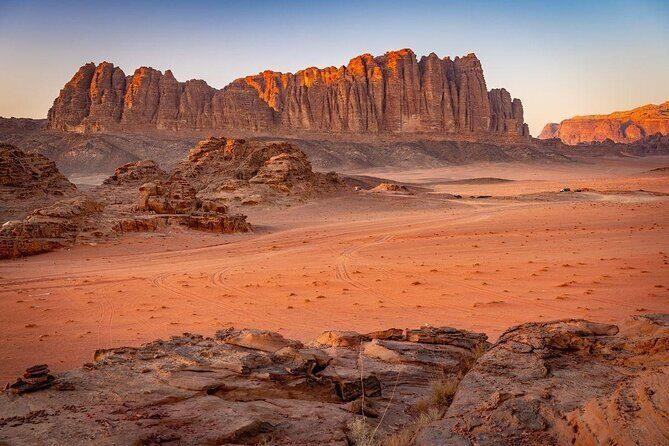
Jabal Umm ad Dami is the highest mountain in Jordan and is located within the wider Wadi Rum desert landscape. This mountain area differs from the European examples because it belongs to an arid desert ecosystem. Its environmental value is linked to geological formations, desert biodiversity, water scarcity, native plants, and the ability of local communities to adapt to harsh climatic conditions.
The Wadi Rum area is also connected with Bedouin culture. Mountains, valleys, and desert routes are part of a cultural landscape shaped by mobility, oral traditions, hospitality, knowledge of water sources, animal care, and adaptation to the desert environment. Tourism in this area is already important, but it needs to be managed in ways that protect fragile desert ecosystems and ensure that benefits remain within local communities.
(UNESCO, n.d.; Ministry of Environment of Jordan, 2021).
Jordan’s green growth policies identify tourism as a key sector for sustainable development. In the context of Wadi Rum and Jabal Umm ad Dami, this means reducing the environmental footprint of tourism, improving water and waste management, supporting eco-tourism, promoting local employment, and strengthening community-based enterprises.
A green strategy for this mountain-desert area should focus on low-impact tourism, Bedouin-led interpretation, protection of native vegetation, water-saving practices in camps, renewable energy use, and support for women’s cooperatives. Traditional food, storytelling, desert guiding, and cultural hospitality can become central elements of sustainable tourism, as long as they are developed with respect for local communities and ecosystems. (Ministry of Environment of Jordan, 2021; UNWTO, 2021).